The Best Time to Visit Wai-O-Tapu
Winter gives you the steam, summer gives you the colour, and the hour you arrive matters more than the month. A season-by-season guide to timing a Wai-O-Tapu visit.

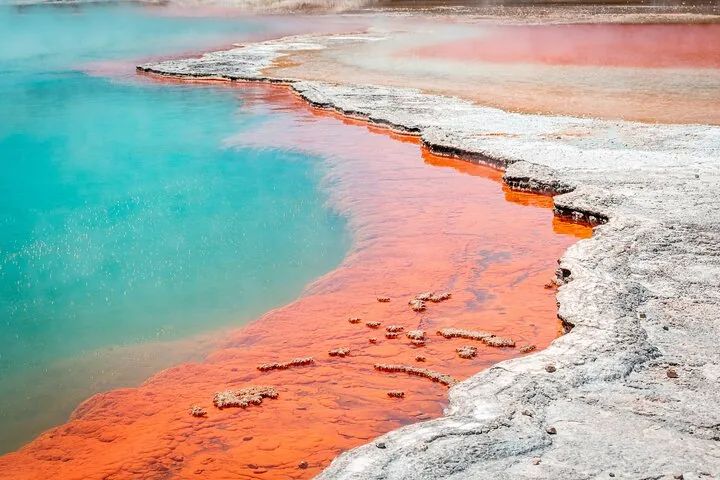
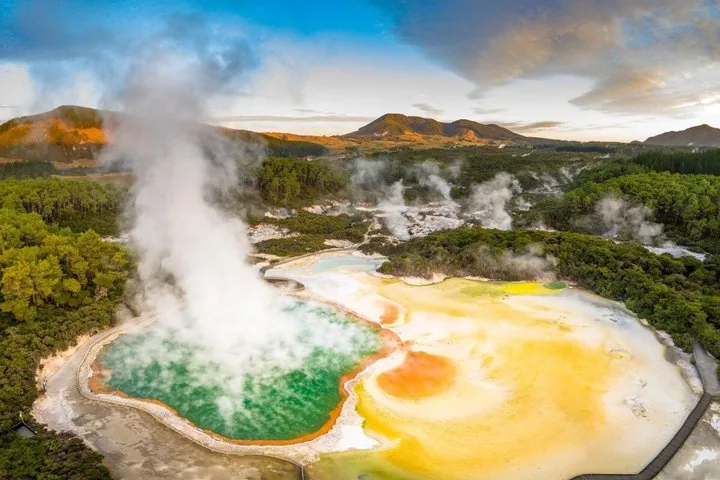
There is a real trade-off at Wai-O-Tapu, and almost nobody warns you about it before you book: the conditions that produce the best steam are the conditions that hide the best colour. Cold, still winter mornings turn the Champagne Pool into a cauldron — and can bury the Artist’s Palette under a white blanket you cannot photograph through. Warm, breezy summer afternoons strip the steam away and let the mineral colours read like paint — and cost you the drama.
Check Availability
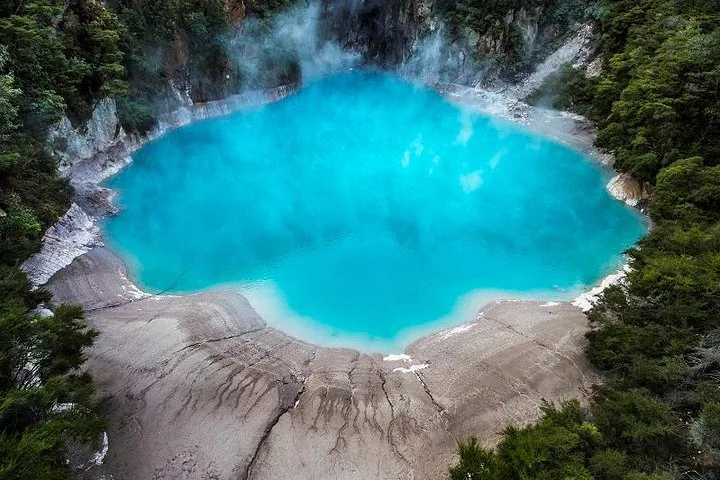
Rotorua based Small Group Morning Tour Waimangu and Wai O Tapu
- 4.8/5 (390 reviews)
- 5 hours
- Free cancellation
- Guide: DE, EN, ES, FR, IT
Includes Hotel pickup and drop-off · Local guide · Driver/guide
You'll choose your date and complete the booking on Viator. Reserve now, pay later on most departures.
The short answer
If you want colour — the yellow-green Artist’s Palette, the acid-green Devil’s Bath, the orange rim of the Champagne Pool at its most vivid — come between November and March, on a bright day, and walk the loops after the geyser rather than before.
If you want atmosphere — steam pouring off every vent, the whole basin looking like the set of something — come between June and August, and be at the gate when it opens.
If you want both and only have one shot, aim for a clear day in March or November: warm enough that steam is not overwhelming, cool enough in the first hour that you still get some.
The park is open all year and the geothermal activity does not change with the seasons. The season changes how comfortable the walk is and how the place looks, so pick the month that suits the rest of your New Zealand trip and then pick the hour.
Other Experiences
Other experiences you might enjoy
Other ways to reach Wai-O-Tapu — half-day runs from Rotorua, day trips from Auckland, and shore excursions from Tauranga.

Best time of day
Come in the morning if you want the Lady Knox Geyser: it runs once a day at 10:15 AM and the park asks you to arrive by 9:45 AM. If the geyser does not matter to you, late morning or early afternoon fits more easily around the rest of a Rotorua day, and the afternoon is the quietest time on the trails. Remember the 3 PM final admission. For three ways to shape a visit around it, see the hour matters more than the month.
What the seasons actually do
New Zealand’s seasons are inverted relative to the northern hemisphere, which trips up more visitors than it should. Summer is December to February; winter is June to August.
Rotorua’s warmest months are January through March, with daytime highs averaging around 24°C in February. July is the coldest, averaging around 13°C by day. The region is wet year-round — roughly 1,390 mm annually, spread across all twelve months — with February the driest month and late winter into early spring the wettest stretch.
For the park, what those numbers mean in practice:
Summer (December–February). Best colour, longest daylight, and the busiest car park. The Devil’s Bath is at its most absurdly green under strong light. Bring sun protection you would not think you need: the pale sinter ground reflects hard, and New Zealand’s summer UV is genuinely severe. This is also peak season for guided tours from Auckland, so book earlier than you think you need to.
Autumn (March–May). The quiet favourite. March still has summer light and settled weather; by May you are getting cold mornings with clear afternoons, which is close to the ideal combination. Tour availability is easier and the trails are less crowded.
Winter (June–August). Maximum steam. On a still morning the temperature gap between roughly 74°C water and single-digit air produces the images that sell the park. The costs are real: shorter daylight, the wettest stretch of the year approaching, and the chance that a heavy-steam day hides the very features you came to see. Dress properly — the sinter flats are open and there is nothing to break the wind.
Spring (September–November). Unsettled and improving. September is typically among the wettest months of the year; by November you are effectively in early summer with fewer people. If you are flexible, late spring is the best value of the year.
Autumn and spring
March to May and September to November are often the best compromise for walking. The air is cooler than in midsummer, the light changes through the day, and you avoid the Christmas and January holiday period. Bring a warm layer for the morning and a rain jacket, because both seasons can turn wet quickly.
Crowds
The park is busiest over the summer holidays, from Christmas through January, when New Zealand families travel and the Auckland day trips run full. Whatever the season, the biggest crowd of the day gathers at the Lady Knox Geyser for the 10:15 AM presentation, and the loops fill after it as tour groups walk through. For quieter trails, walk the loops from the 8:30 AM opening before the geyser, or come in the early afternoon and skip the geyser.
Photography conditions
Cloud is not bad news at Wai-O-Tapu. Soft, even light can bring out the mineral colours of the Artist’s Palette better than harsh midday sun, and cool air makes the steam more visible. The wind moves the steam across the Champagne Pool every few minutes, so wait for it to shift before you decide the first view is the only one.
The hour matters more than the month
Here is the thing that actually decides your visit, and it is not seasonal.
The Lady Knox Geyser erupts once a day, at 10:15 AM. It is not spontaneous — a ranger induces it by hand with a measure of surfactant, after a short explanation of why a geyser needs help at all. It sits at a separate site about ten minutes’ drive from the main park entrance. There is no second showing, and no amount of good weather compensates for arriving at eleven.
The park is open seven days a week, 8:30 AM to 4:30 PM, with final admission at 3 PM.
That gives you three sensible shapes for a morning:
- Gate at 8:30, loops first, geyser by 9:45. The steam is heaviest and the trails are empty. Best in summer, when the steam will have thinned by the time you are photographing anyway.
- Geyser at 10:15, loops after. What almost every guided tour does. You walk the loops between about 10:45 and 12:30, by which time the light is high and the colours are at their strongest. Best in winter.
- Afternoon, skip the geyser. Quietest of all, and a legitimate choice if the geyser presentation does not appeal — it is a crowd around a cone, not a wilderness moment. You lose nothing else.
Every guided tour on this site is built around option 2, which is why the Rotorua pickups run between 8:00 and 8:30 AM for a park half an hour down the road. Our guide to the Lady Knox Geyser eruption time sets out the geyser morning in order, and getting to Wai-O-Tapu from Rotorua covers the drive, shuttles and tours.
Booking around the seasons
In summer and over the Christmas–February stretch, the Auckland day trips fill first. They run on minimum numbers and small vehicles, so late bookings are genuinely a risk. Everything on this site cancels free up to 24 hours before, so there is no reason to wait.
In winter, availability is easy but weather cancellations are not a thing — these tours operate in all conditions. That is a feature, not a warning: dress for rain and you will still walk the park. What changes is that the guided small-group option becomes more valuable, because someone else is driving in the wet and you are not standing in a car park working out where the geyser is.
For a first visit in any season, the small-group morning tour from Rotorua is the one we point people at: pickup between 8:00 and 8:30, geyser at 10:15, a guided hour inside Wai-O-Tapu and a second guided hour at Waimangu Volcanic Valley, back by about 1 PM. It runs year-round and in all weather. If you would rather see the full price ladder first, our guide to which Wai-O-Tapu tour is right for you lays out all eight options.
What to wear, whatever the month
- Closed walking shoes. The trails are boardwalk and packed gravel, and the mineral surfaces get slick after rain.
- A rain jacket, in every season. Rotorua has measurable rain in all twelve months, and the tours run regardless.
- A warm layer between May and September. The open flats hold no heat once you step away from a vent.
- Sun protection between November and March, more than the temperature suggests.
- A camera you can work one-handed. The boardwalks are narrow and there is no room to set up a tripod.
Practical planning essentials
- Wai-O-Tapu is about 31 km from Rotorua, roughly a 27-minute drive in normal conditions.
- The main geothermal park is self-guided, with three connected walking tracks that let you shorten or extend the route. Our guide to how long you need at Wai-O-Tapu gives the walking times.
- There are no toilets inside the main geothermal park or at Lady Knox; use the Visitor Centre facilities first.
- Check the official site before you travel, because hours and presentation times can change.
Final thoughts
Choose the season for the rest of your trip, then choose the hour for Wai-O-Tapu: morning for the geyser, afternoon for quiet trails. Leave a buffer for driving and weather, and keep the 3 PM final admission in mind.
Frequently asked questions
What is the best month to visit Wai-O-Tapu? February for colour and settled weather, July for steam and atmosphere, and March or November if you want a workable compromise between the two with fewer people than midsummer.
Is Wai-O-Tapu worth visiting in winter? Yes, and for photographers it is arguably the best season — the temperature difference between the pools and the air produces far more visible steam. Accept that a very cold, still morning can obscure the Artist’s Palette entirely, and dress for open, exposed ground.
Does Wai-O-Tapu close in bad weather? The park operates year-round and the guided tours run in all conditions. Individual features are never “closed” for rain. The park is open seven days a week, 8:30 AM to 4:30 PM, with final admission at 3 PM.
What time should I arrive at Wai-O-Tapu? By 9:45 AM if you want the Lady Knox Geyser — that is the park’s own stated arrival time for the 10:15 presentation, at a separate site ten minutes from the main gate. If you are skipping the geyser, the early afternoon is the quietest window.
How long does Wai-O-Tapu take? About 30 minutes for the first loop to the Champagne Pool and roughly 1 to 1.5 hours for all three loops, so plan 1.5 to 2 hours inside the main park, plus roughly 45 minutes if you include the geyser. Our guide to how long you need at Wai-O-Tapu has the full breakdown.
Sources
Checked 13 October 2026: Wai-O-Tapu visitor information (hours, final admission, Lady Knox time and arrival advice, toilets, three connected tracks, 31 km / 27 min from Rotorua), Rotorua NZ, Weather Spark and Climate-Data.org for Rotorua’s temperatures and rainfall, and the linked booking listings, read through the Viator partner API.
See Wai-O-Tapu and Waimangu in One Morning
A small-group minivan picks you up at your Rotorua hotel around 8 AM, gets you to Lady Knox Geyser for the 10:15 eruption, and has you back by 1 PM. Free cancellation up to 24 hours before.
Check Availability & Book